Wednesday, May 03, 2006

Live Sail Fish

Today is the start of Wednesday night Sunfish racing. So yesterday it was time to fix the lights on the Sunfish trailer (there's a whole post about trailer electrics itching to be written), pump up the tires, find all the Sunfish bits and pieces (now where did I put the mainsheet last fall?), wash the boat and apply a coat of Teflon polish (purely to keep the boat clean of course - couldn't possibly make the boat faster, could it?)

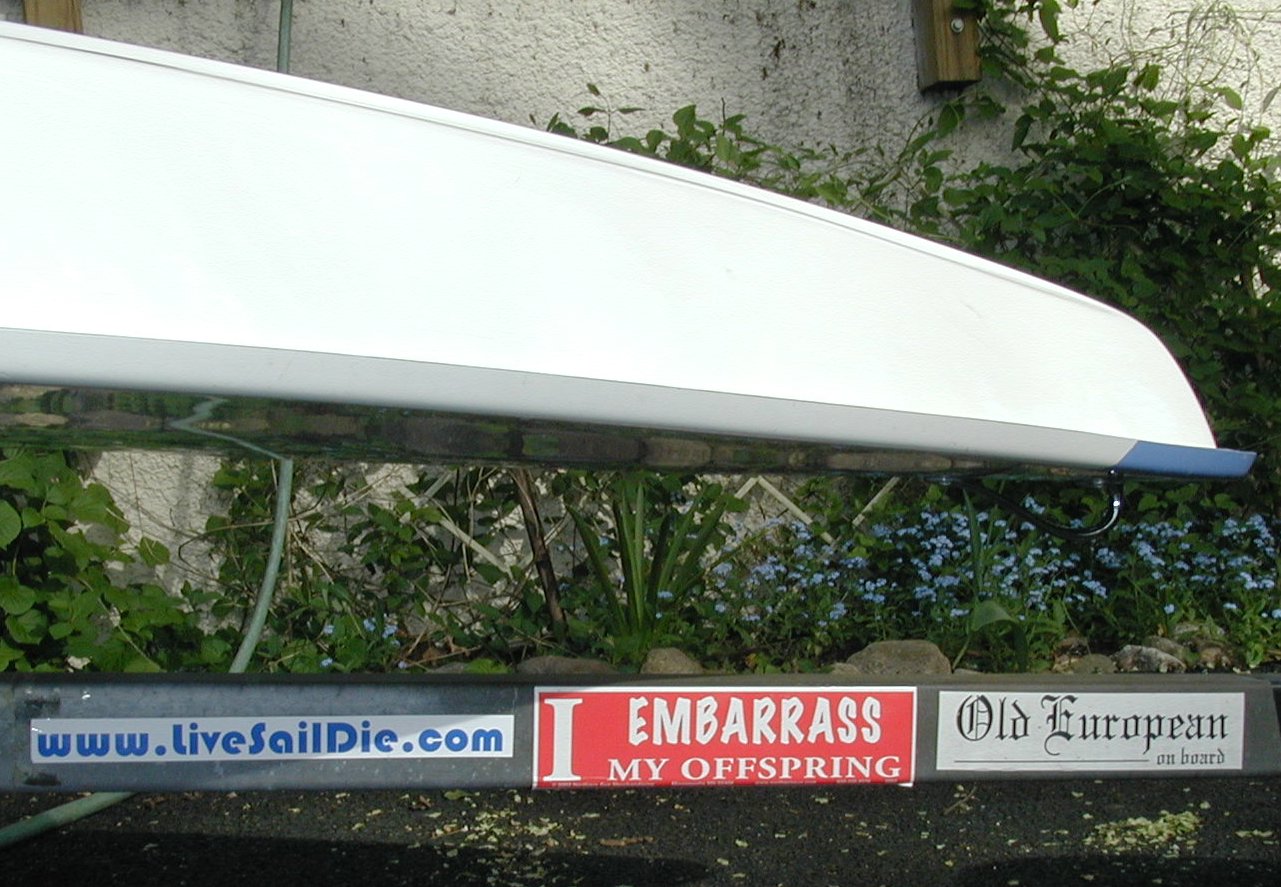
Finishing touch was to apply to the trailer one of the Live Sail Die stickers so graciously donated by og. I wrote about all the bumper stickers on this trailer last year. I've been saving a special spot for a really cool sticker right next to the ones saying Old European on board and I Embarrass My Offspring. The Live Sail Die sticker fills that space admirably. Thanks og.

I'm all set.

Tuesday, May 02, 2006

Shake Jorge

I wrote a post a few weeks ago about the need to wear gloves to protect your hands when sailing - or to have very hardened hands. Most of the commenters to this post agreed that sailing gloves are advisable at least in some situations - except for one sailor going by the name of scheherazade who presumably is some bewhiskered old salt with leathery palms hanging out at the yacht club while simultaneously pouring scorn on the young folk who wear sailing gloves and boring them with stories of rounding the Horn on a clipper in a force 10 storm.

Or perhaps sailors who don't use gloves have a different strategy? I discovered today one method used by professional athletes to toughen their hands in this article entitled Why Athletes Pee on Their Hands.

Eeeuggh! Never shake hands with a sailor who doesn't wear gloves.

Monday, May 01, 2006

Jetskier Jailed

Regular readers of this blog will know that about the only class of water user that I hate with a vengeance are jetskiers. Thanks to Boating Safety Law and News for posting a link to this story about a jetskier who rammed a fellow idiot aquatic chainsaw rider, injured him and then fled the scene. Looks like his stupidity is going to cost him 90 days in jail, and fines and costs of around $50,000.

That's the way to treat 'em.

Or this.


Nobody Drownded

On Sunday it was my turn to do race committee for our Laser frostbite fleet, a duty that every sailor is obliged to do once in the fall and once in the spring season.

Tillerman's First Rule of Frostbite Race Committee: It's always colder doing race committee then you think it will be and it's much colder than actually sailing. You'd think that standing in dry clothes on a dry committee boat would be warmer and more comfortable than half immersing yourself to launch your Laser and then getting drenched with cold water all afternoon plus an occasional ducking every time you capsize. You would be wrong. When sailing a Laser you are (nearly) always moving, certainly performing enough exercise to stay warm assuming you have dressed properly in several layers of warm, wicking clothing and your goretex drysuit with rubber bootees and latex gloves and ski hat. On race committee you are not moving about enough to stay warm and, if you are unlucky enough to be on a mark boat, you are immersing your hands and arms in frigid water at intervals too. Believe me I have had some miserably cold days doing race committee for this fleet.

Tillerman's Second Rule of Frostbite Race Committee: Always volunteer to do race committee at the warmest end of the season. Early in the fall season or late in the spring season. October is likely to be warmer than December; May is likely to be warmer than March. It took me a year or two to work this out. (I must be a slow learner.) I had originally assumed that doing race committee in December would be preferable to missing a day of sailing in October. Wrong. Race committee in a cold month is one of the most painful and depressing ways to spend a dreary freezing winter's afternoon. Much better to be sailing in December and doing committee duty in October.

Tillerman's Third Rule of Frostbite Race Committee: Think what you would wear for sailing today and then wear more. You can never wear enough clothes to stay warm for frostbite race committee.

BOCTAOE.

Last Sunday, for the first time in all my years sailing with this fleet, Tillerman's rules of frostbite race committee didn't apply. The temperature was in the mid 60s, the wind varied from zero to six knots and the wind direction swung around from SW to SE. I was on a mark boat laying the buoys for the leeward gate and the start and finish line. We dropped the buoys and ran a race. The wind shifted. We moved the course. We ran another race. The wind shifted again. We moved the buoys. We started a race. The wind died and then came back. We started another race. The wind died again. Some sailors managed to finish anyway. We shortened the course and waited. The wind never came back. We towed all the sailors back to the club.

And it was warm. The young man and I on the mark boat actually stripped off a layer during the afternoon. We were lifting the marks from the water using bare hands without any fingers freezing and dropping off. We applied sunscreen. We lazed on the boat in the sunshine. We took dozens of photos of the racers.

It was a frustrating day for the racers. The wind was so shifty and patchy that many excellent sailors were at the back of the fleet. When the wind died on a run the tide pushed people sideways and it was a real battle to gain enough boatspeed to make the leeward mark. Some sailors were unable to finish the last race within the time limit. Several sailors gave up halfway through a race and rocked their boats back to the club.

But it was an excellent day to be doing race committee. Not cold. Not too much action. None of the sailors broke anything. Nobody needed rescuing.

I was reminded of a comic monologue by the British actor, Stanley Holloway, that was popular on the radio when I was a boy growing up in England. In his droll story about Albert and the Lion, a tale about a boy being eaten by a lion - of great appeal of course to a young lad's morbid sense of humor - Albert and his parents visit the famous English seaside town of Blackpool. Before heading for the zoo and Albert's fatal encounter with Wallace the lion, they take a look at the ocean.

They didn't think much to the ocean,
The waves they were piddlin' and small.
There were no wrecks and nobody drownded,
'Fact, nothin' to laugh at at all!

That about sums it up. No wrecks. Nobody drownded. Nothing to laugh at at all. An excellent day to do race committee. It was actually warm.

And before one of you pedants points out that I spelled "drowned" incorrectly, go check out the original lyrics.

Sunday, April 30, 2006

Woods and Lakes Run 2006


Dear Tillerman, Congratulations on finishing the WOODS AND LAKES RUN 2006 (29TH ANNUAL!) on April 29, 2006.

For your records, the weather that day was SUNNY!!! COOL!! 52 degrees, COURSE DRY.

There were 24 finishers in the Men 50 to 59 age group and 106 finishers in the 10K race. Your overall finish place was 60 and your age group finish place was 17.

Your overall finish percentile was 57 while your age group percentile was 71.

Your time of 51:36.64 gave you a 8:19 pace per mile.

We hope to see you again next year for the 30th ANNUAL Woods and Lakes Run!!

Saturday, April 29, 2006

Reflections


Avid readers (are there any?) of this blog will have noticed that I have not actually gone sailing on any day except Sundays since last October. But on Friday, I went sailing. Well, not exactly.

After the ceremonies for Tillerwoman, she and I along with son #2 and his girlfriend headed up to the lake in the woods. They did some fishing and I played with my radio-controlled Laser.

The Constant Gardener

Friday was Tillerwoman's day.

One of my commenters christened my wife as Tillerwoman a few months ago and I've taken to using that name here to refer to her myself. It only occurred to me the other day that the name is a better fit than I had ever realized.

tiller, n. One who tills.

till, v.t. Prepare and use soil for crops.

Yup. I just waggle a tiller. She is a tiller.

My thing is sailing; her thing is gardening. My idea of a perfect day is playing with my Laser in wind and waves. Her idea of a perfect day is playing in the dirt.

I've spent the last few summers teaching kids to sail. She's spent the last few summers helping to run a gardening program for kids where they grow their own vegetables and flowers.

On Wednesday nights I go racing with a local Sunfish fleet. On Wednesday afternoons, Tillerwoman runs an after-school nature program for third-graders at our local elementary program. She's been running that program for fifteen years now.

This year she received the recognition that she richly deserves. She was chosen to be the person to be honored in our town's Arbor Day ceremony. Her name was displayed on the notice board outside the town hall all week. (I would have shown you a photo but it looks just like one of my church sign spoofs so you probably wouldn't have believed it.) On Friday afternoon all the kids from the elementary school assembled in front of the school in perfect, sunny, spring weather. The school band played. Poems about trees were read by the first grade classes. Speeches were made by the principal, the school superintendent, the mayor and the chair of the shade tree commission. A certificate was presented. A flowering cherry tree was ceremonially planted in honor of Tillerwoman. (That's it in the photo above.)

And everyone applauded Tillerwoman for all her wonderful work with the kids over the years teaching them about plants and passing on to them her love of nature.

I'm so proud of her.

Friday, April 28, 2006

Yoga

I do like to do some yoga stretches before any exercise, whether it is running, sailing, weight-lifting or using the hiking bench. Many experts advise that stretching is helpful, even essential for older bodies like mine.

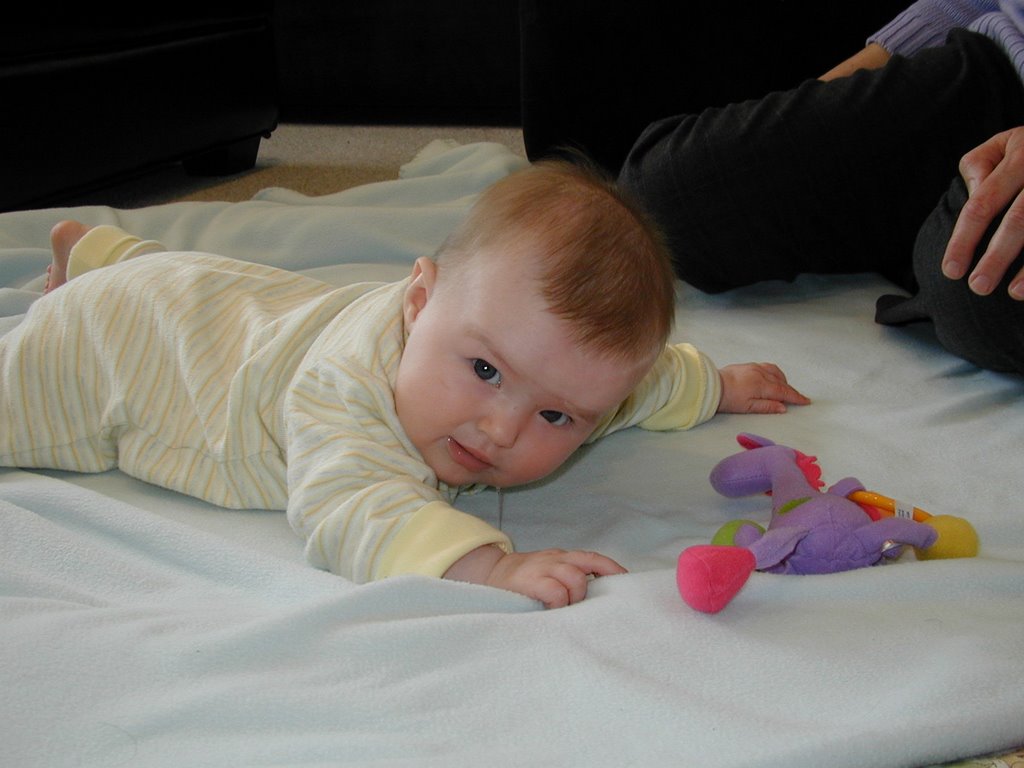
I think Cutest Granddaughter in the World has been watching me doing my yoga and trying to copy me.

Here she makes a brave try at Upward Facing Dog but, being the genius that she is, I think her brains are too heavy for her to achieve the perfect position.


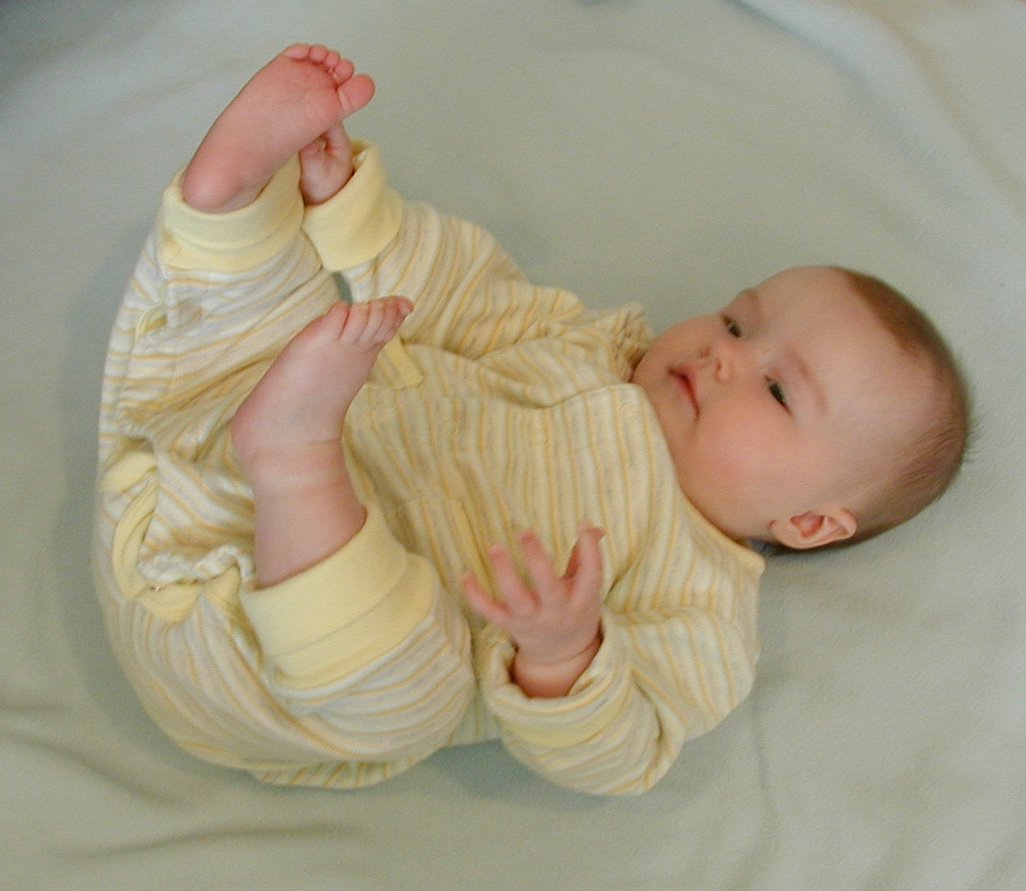
She makes a better attempt at Full Boat Pose. Of course with both grandfathers having a passion for boats and a father and uncle who are sailors we would expect her to be good at anything to do with boats.


Perhaps for the time being she should stick to what she does best.


Sleep well you Princess of New England.

Thursday, April 27, 2006

Sail Towards the Next Shift

It's been a couple of weeks since my last post about Dave Dellenbaugh's lecture on Top Ten Tactical Tips. The last two tips were about sailing the beat, and so is this one. At least the title is. The discussion then went off into some issues related to downwind sailing and current. Not sure if this is what Dave intended or just where the audience's questions led him.

"Sail towards the next shift on a beat." As Dave said, this works in both oscillating and persistent breezes. If it's oscillating you are sailing a lift out to where the next header should be coming from. And if it's persistent you are sailing the header expecting to be headed more and more and then be able to lay the mark in a big lift. Either way you are sailing the shortest course to the windward mark.

So what does it add to have another tip that says, "Sail towards the next shift on a beat"? Beats me. Can any of you clever commenters out there explain why Dave used up one of his ten tips to repeat advice he had already given? Or am I missing something?

Anyway, under this title Dave then meandered off into various other pieces of tactical advice. First was to say that in light air you should go for pressure and in heavier air go for shifts. Having done most of my sailing in light air on lakes I have certainly learned this the hard way. If you can sail in two knots of breeze over there it sure beats sailing in half a knot of breeze over here, irrespective of headers or lifts or even if "over there" is ninety degrees away from the course to the windward mark or fifty yards above the layline.

Dave then pointed out that often a change in wind direction is associated with an increase in velocity. So in sailing towards a shift upwind you are sailing towards a wind with better pressure and better direction. But the reverse is true offwind.

This is where my Laser sailor's eyes start to glaze over. At one level I can sort of grasp intellectually the standard tactical advice about how you want to be sailing on the headed shift downwind. But it's not something I can relate to physically. Given that a Laser can sail extreme angles by the lee - and is often faster sailing a run by the lee - this whole art of sailing the shifts downwind is something I have never bothered to try and understand and probably never will.

Then Dave got into a discussion of sailing a beat where there is land towards one side, and why it usually pays to sail towards the land. The wind off the land may well be oscillating so there will be shifts you can use. Also the way the wind curves off the land is effectively a persistent shift so you can use that too. Hmmm - I guess that is why my strategy of banging the right corner in a NW breeze (when the land is on the left) in the last few weeks of frostbiting has never seemed to work out? Duh.

BOCTAOE. But of course, the closer you get to the land, the lighter the wind might be. So it might be the wrong choice. Ain't sailboat racing grand?

We finished off talking about sailing in current in the simple example where the current is running straight up or down the wind direction. Dave said that upwind if you head towards the side with the most favorable current, then the effect of the current on your apparent wind will mean that you are sailing in better pressure. This works irrespective of whether the current is running up or down the wind. On the other hand, on a run if you head towards the side with the more favorable current you will be sailing in lower apparent wind.

I must admit this one was a new idea for me. If you geeks don't believe it, draw your own vectors - I'm not starting a current/tide/apparent wind geeking out thread. At least not until we've beaten to death the "how do sails work" geekfest. Perhaps in a few months we can tackle the good old "Is there a lee-bow effect" question and other brainteasers.

So there you have it. A bit of a ragbag of different tactical tips under one heading this time. Next tip is also about the beat.

Wednesday, April 26, 2006

Sailing Goodies

Wow! What a great list of sailing doodads!

I wrote about my favorite sailing store Annapolis Performance Sailing before and I make no apologies for plugging them again because the list of Hot New Items on their website this week is a treasure trove of sailing booty. If you're looking to buy a gift for that special sailor in your life, you are sure to find something here to please him or her.

Top of the list are the Velocitek S3 GPS Speedometer and S5 GPS Race Computer. I wrote a post about the S3 back in December when I first heard about it via Rohan Veal's blog. A total indulgence of course for a middle-of-the-fleet weekend-warrior Laser sailor like me. What does it matter if I'm going at 2.1 or 2.2 knots? I'm not going to be breaking any sailing speed records. But there is something seductive about the idea of sailing a screaming reach with the eyes focused on those huge digits indicating my speed. If I move my weight 2 inches back does it squeeze out another 0.1 knot? How about if I just sheet in a smidgen? Only for practice of course. Expensive, but what a cool toy!

Then there is the C-Vane Laser Wind Indicator. A deceptively simple invention it solves a problem well know to anyone who has sailed Lasers for a time.
During any given regatta, one sailor will cross close enough to windward of another so that their boom passes just above the wind indicator of the leeward boat. Any Laser sailor knows what happens next. The mainsheet eventually rips the vane from its bracket, never to be seen again. There is a better way. C-VANE is here. When a threatening mainsheet passes over a C-VANE, it merely slides down the bracket, making a casual spin of the vane without hanging up and away it goes, leaving the wind indicator still attached and fully functional. Full protection from accidental removal and designed with less friction than any other small boat wind indicator, the C-VANE is the new paradigm for single handed sailors of all designs.
Another expensive trinket to avoid a very occasional mishap. But when you're racing in fleets like this one it might be worth it.

I don't quite know why APS is advertising cold weather gear in April on their Hot New Items List - suspect the winter gear will shortly be moving to Sale Rack Blowouts. However, one of the items on the list is a staple of my own frostbiting equipment and I can heartily recommend it. The Henri-Lloyd Goretex Drysuit is, at the same time, one of the most effective and one of the most hardwearing pieces of sailing clothing I have ever owned. No more of that yucky condensation in your nether regions that you always accumulate after an active day of sailing in a non-breathing drysuit. I must have had my current drysuit for at least five years now and even after all those years of frostbiting, grinding back and forth, in and out, on an abrasive Laser deck it's hardly showing any signs of wear.

The hot items list also includes Steve Cockerill's Boat Whisperer DVDs - something I don't need to buy as son #2 bought them for me for Christmas. I am ashamed to admit that I was trashing Steve for his choice of title in a post I wrote on the day after Christmas Day. But having watched them and also attended a talk by Steve a few weeks ago I can only say that, if you are a sailor of boats like the Laser these DVDs have the power to transform your life. They will convince you that many things you thought you knew about boat-handling are 180 degrees wrong. I'm going to have to write some posts about what Steve is teaching in the DVDs some time soon.

Finally, perhaps the most unusual item on the hot items list is the Alden Bugly Current Stick and Wetland Seed Sower.

Slip an Alden Bugly Current Stick and Wetland Seed Sower into the water near a mark. The ballasting is such that all but the yellow cap is submerged. Thus ABCs are unaffected by wind and are a far more reliable current telltale than "reading" the wake on a crab pot or other surface current telltale devices which are largely wind instead of current driven.

Pick it up and use it again or if you can't pick it up not to worry. ABCs are 100% biodegradable and as they biodegrade they release wetland seeds. Wetland grasses will grow from some of the seeds resulting in cleaner water we wouldn't otherwise have. You'll win the race and be the Johnny Appleseed of the racecourse. Cool!
What will they think of next?

Now where's my credit card? I have an urge to do some shopping for that "special sailor in my life". (Me of course.)